

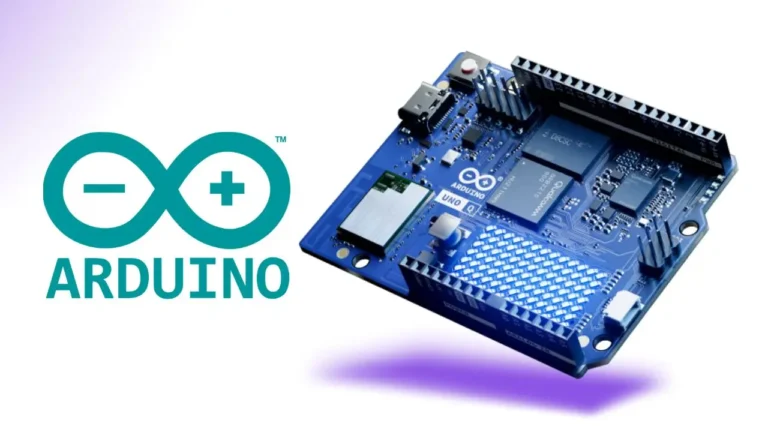
Finding the right ChatGPT prompt to write Arduino C++ code for stepper motors is the difference between a working robotics project and hours of frustrating compiler errors.

If you paste a generic request into the AI, wire up your NEMA 17, and watch the motor violently vibrate instead of turning smoothly, the problem usually isn’t your hardware. The issue is how you structure your instructions for the language model.
Most makers ask for basic motor control and end up with outdated, blocking code that paralyzes the rest of their microcontroller. You need a specific framework to guarantee efficiency. Here is exactly how to engineer your requests to generate production-ready firmware on the first try.
Why Generic AI Code Fails
When you ask an AI to generate motor control scripts without strict constraints, it defaults to the standard, built-in #include <Stepper.h> library. This is a massive mistake for modern workflow automation.
The standard library relies heavily on blocking functions (like delay()). This means your microcontroller cannot read sensors, update OLED displays, or process incoming serial commands while the motor is in motion. Furthermore, language models frequently hallucinate pin assignments, attaching PWM-only pins to simple step/direction drivers.
You have to explicitly declare your hardware stack and software logic in your initial request to prevent these errors.
The 4 Core Elements of a Working Prompt
A high-quality prompt removes all ambiguity. Treat the AI like a junior developer who needs exact specifications:
- The Hardware Stack: State the exact microcontroller (e.g., ESP32 vs. Uno) and the specific motor driver (e.g., A4988 requires two pins; an L298N requires four).
- The Library Mandate: Explicitly ban the default library and mandate non-blocking alternatives like
AccelStepper. - The Movement Logistics: Define speed (steps per second) and acceleration rates.
- The Debugging Output: Request
Serial.printstatements to verify logic on your monitor before hooking up a high-current 12V power supply.
The Copy-Paste Prompt Templates
Instead of writing from scratch, use these engineered prompts. Just swap the bracketed information with your specific hardware pins.
1. The “Non-Blocking Sweep” Prompt
Use this for standard, smooth back-and-forth movement without freezing your board.
“Write an Arduino C++ sketch for an [Arduino Uno] using the [AccelStepper] library to control a [NEMA 17] via an [A4988] driver. The Step pin is connected to pin [3], and the Dir pin is connected to pin [4].
Set the max speed to 1000 and acceleration to 500. The motor should move 800 steps forward, wait 1 second using a non-blocking timer (do NOT use
delay()), and then move 800 steps back in a continuous loop. Include Serial.print statements indicating the motor’s current position state.”
2. The Advanced “Sensor Homing” Prompt
Writing a reliable homing sequence manually takes significant trial and error. Use this to automate it.
“Write an Arduino C++ setup function using the [AccelStepper] library to home a stepper motor. The motor should step slowly counter-clockwise until it triggers a physical limit switch connected to pin [5] (using
INPUT_PULLUP).Once the switch reads LOW, the motor must stop immediately, back up 10 steps, and set the current position to zero using
setCurrentPosition(0). Ensure this homing routine does not permanently block the main loop if the switch is never triggered (add a timeout timeout failsafe).”
Troubleshooting AI-Generated Code & Hardware Realities
Even with a highly optimized prompt, physical hardware realities can ruin your project. The AI assumes your physical wiring is flawless.
- Vibrating but not turning? The AI likely swapped the Step and Direction pins in the code. Swap the pin numbers in the software declarations and re-upload.
- Moving agonizingly slow? Check your physical microstepping configurations. If your hardware driver is hardwired for 1/16th microstepping via jumpers, an AI command to move 200 steps will barely rotate a standard 1.8-degree motor. You must adjust your step counts in the prompt.
- Motor too hot to touch? Overheating is a hardware issue, not a C++ issue. Always use a multimeter to tune your driver’s VREF potentiometer to limit current before running any automated code sequences.
Essential Resources
- AccelStepper Documentation – The absolute best library reference for non-blocking motor control.
- Wokwi Arduino Simulator – Test your generated C++ scripts virtually before wiring up your physical hardware.
- Arduino Language Reference – Official documentation for verifying core C++ syntax and logic.
- OpenAI ChatGPT – The primary tool for generating your microcontroller scripts.